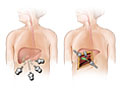
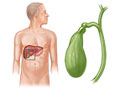
Laparoscopic gallbladder surgery, also called laparoscopic cholecystectomy (say "ko-luh-sis-TEK-tuh-mee"), removes the gallbladder through several small cuts (incisions) in the belly.
The surgeon puts a lighted tube (scope) and other surgical tools through the small cuts (incisions) in your belly. The belly is inflated with air. The air pushes the belly away from the organs so that the surgeon can see them clearly. The incisions leave scars that fade with time.
Before the surgeon removes the gallbladder, you may have a special X-ray procedure called intraoperative cholangiogram. It shows the gallbladder and the bile ducts.
The surgery usually takes 2 hours or less. You will be asleep.
After surgery, bile flows from the liver (where it is made) through the common bile duct. It then flows into the small intestine. Your body will work fine without a gallbladder.
In rare cases, the surgeon needs to switch to an open surgery that uses a larger incision. This can happen when there are problems such as swelling, scar tissue, and bleeding.
What To Expect
Most people go home the same day. You probably will feel better each day. Most people have only a small amount of pain after 1 week. If you have a desk job, you can probably go back to work in 1 to 2 weeks. If you lift heavy objects or have a very active job, it may take up to 4 weeks.
After laparoscopic surgery, it's normal to have some shoulder pain. This is caused by the air that your doctor put in your belly to help see your organs better.
You may have gas or need to burp a lot at first. A few people get diarrhea. The diarrhea usually goes away in 2 to 4 weeks, but it may last longer.
Why It Is Done
Laparoscopic gallbladder surgery is the most common method to remove a gallbladder that's causing problems. Most people go home the same day.
How Well It Works
Laparoscopic gallbladder surgery is safe and effective. Surgery removes the gallbladder and gets rid of gallstones. It does not remove stones in the common bile duct. Rarely, gallstones can form in the common bile duct years after the gallbladder is removed.
Risks
The overall risk of laparoscopic gallbladder surgery is very low. Possible complications include:
- Infection of an incision.
- Bleeding.
- Injury to the common bile duct.
- Injuries to the liver or intestines.
- Bile that leaks into the belly.
- Risks of general anesthesia.
After gallbladder surgery, some people keep having belly symptoms, such as pain, bloating, gas, or diarrhea (postcholecystectomy syndrome).
Credits
Current as of: October 6, 2025